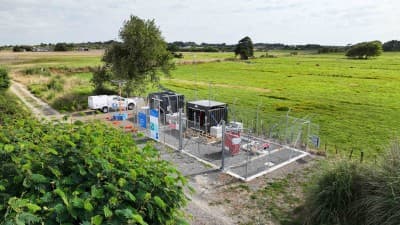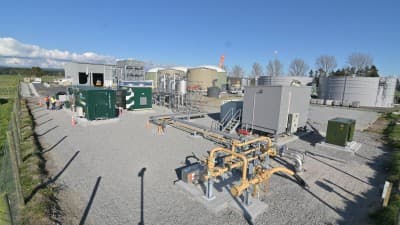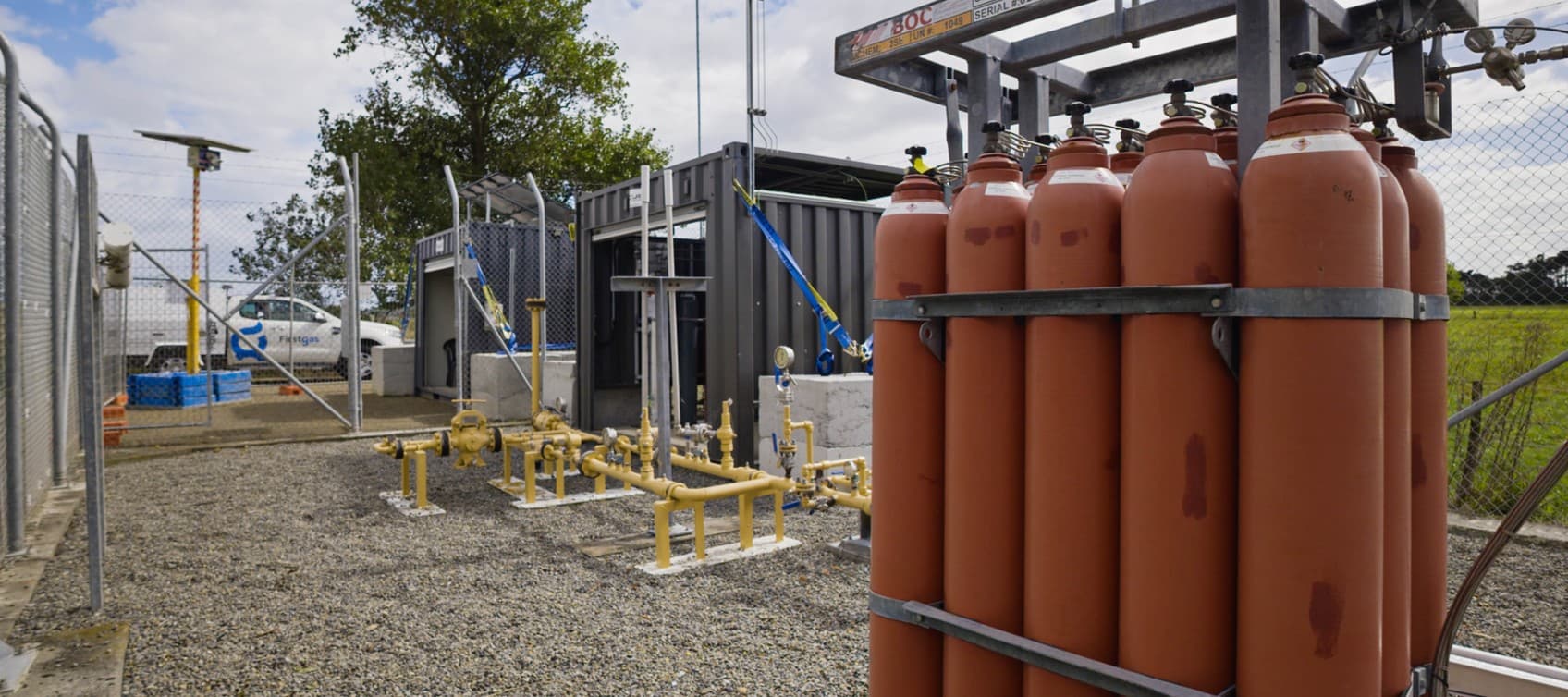
New Zealand’s first ever hydrogen blending pilot was carried out in Te Horo on the Kāpiti Coast from June to early October this year. Led by Firstgas (part of Clarus), the Pilot involved blending green hydrogen with natural gas into the existing natural gas pipeline.
Having started with a 3.5% hydrogen blend in June, the Pilot reached a 10% milestone in September, duly celebrated by Firstgas and its pilot partners GasNet, Nova Energy, Powerco and Vector. The Pilot was completed in early October successfully reaching a 12% hydrogen blend, while staying within the gas specifications.
“We are thrilled we have successfully completed this pilot that demonstrates the feasibility of using our existing gas infrastructure and appliances to transport hydrogen blends in New Zealand,” said Clarus GM Future Fuels, James Irvine.
“Our energy future will be shaped by a mix of options, and this work helps us understand the option of hydrogen blending in more detail.”
Te Horo’s involvement
Te Horo was selected for the Pilot due to its small and accessible location and pipeline compatibility. The Pilot team worked with 14 households in Te Horo, who used the blended gas in their home appliances.
To ensure safety at every stage, the team met frequently with the Te Horo residents to talk about their gas supply, check their gas appliances and take samples across the whole network.
A hydrogen blend display home was established, with heating and stove top gas appliances supplied by Rinnai, using the blended gas for cooking and heating to demonstrate how existing assets performed during the Pilot.
“The display home has allowed us to show what’s possible while we gather evidence to inform the development of renewable gases in New Zealand,” explains James Irvine. It’s not about introducing hydrogen into every household but about proving that our networks and infrastructure can be ready, if and when hydrogen is widely available.”
Hydrogen blending is proven overseas
Hydrogen blending is not new, and the technology has been proved safe and effective. It is already being used in the US, UK, Canada, Japan and Australia.
In Markham, Ontario, for example, energy company Enbridge is blending up to 5% hydrogen into its natural gas network serving over 3,600 customers, including manufacturing plants, municipal buildings and institutional facilities.
While electricity will continue to play a major role in New Zealand’s clean energy future, not every sector can realistically make the switch in the short term. Hydrogen is recognised internationally as a possible renewable gas option that can be stored and transported at large scale.
This could make it an ideal complement to solar and wind generation, and a valuable tool for helping decarbonise hard-to-electrify sectors, such as high-heat industries, heavy transport, and those already using hydrogen as a feedstock. For them, hydrogen could provide a viable low-carbon solution.
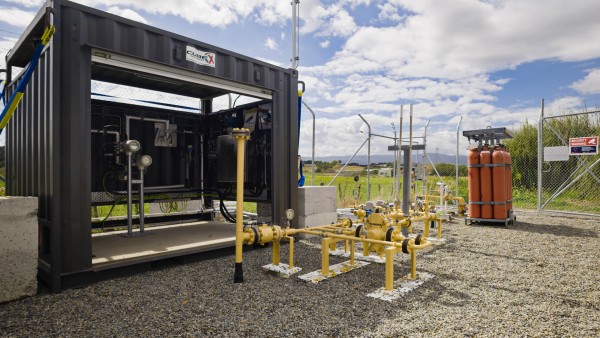
The Hydrogen Blending Pilot site
Working with WorkSafe
More than five years of preparation and planning went into ensuring the Pilot could be delivered successfully, with close monitoring at every stage. The project team worked closely with WorkSafe’s Energy Safety team.
“We were pleased Firstgas engaged with us at an early stage in their preparations to ensure safety for consumers and the public, as well as workers,” said WorkSafe Energy Safety Manager Mark Wogan. “This included sharing engineering studies which assessed the suitability and safety of the distribution network and installations involved.
“Because piping blended gas into homes is new under the Gas Regulations 2010, Firstgas applied to us for two regulatory exemptions so the pilot could go ahead.”
In October, Standards New Zealand released an updated national standard for reticulated gas (NZS 5442:2025) accommodating blends of up to 10%hdyrogen in gas distribution networks, which marks a significant step forward in supporting New Zealand’s energy transition.

The Firstgas team and the Hydrogen Blending Pilot partners
It takes a team!
Firstgas Project Manager Adeel Mushtaq led the hydrogen blend pilot since late 2023. He says bringing the project to life took an enormous amount of cooperation from the Te Horo residents, gas distributors, energy retailers, WorkSafe, Ministry of Business, Innovation and Employment (MBIE) and many more. “Everyone pitched in to support this project across our organisation and externally,” he says. “If people hadn’t worked so well together, we could not have done it all.
“While some teams worked on legal and regulatory hurdles, the technical team reviewed and completed a detailed design phase for the pilot, drawing on research from similar overseas trials.
“Then with materials delivered from various suppliers, the hydrogen blend setup was integrated in the workshop for testing. After site installation was completed and we received the delivery of hydrogen from BOC Gas, the team started working to prepare the site for hydrogen injection.
“All sorts of works were involved, starting with the civil works to increase the footprint of the existing delivery point in Te Horo, so the new equipment would fit in it. In parallel, we were doing instrumentation and electrical works in the workshop and assembling, integrating, testing and doing functional checks too, back here in New Plymouth.”
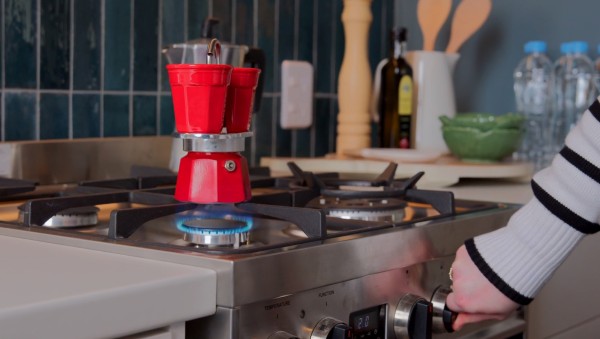
Gas hob using a blend of hydrogen and natural gas.
A mix of energy options in the future
“New Zealand’s energy future will be shaped by a mix of options, and this pilot has helped us to properly understand hydrogen blending, as one of them,” says Mushtaq. “
“We need to keep an eye on the price of hydrogen. I think there is medium- and long-term potential for hydrogen to be put into the gas network for all sorts of customers, such as high-heat industries that are hard to electrify and heavy transport.
“The purpose of this pilot is not to suggest hydrogen blending is a total solution, but to test whether our existing infrastructure and appliances can safely transport hydrogen so that, if and when hydrogen becomes commercially viable, the networks and capability are ready.
“By doing this groundwork now, we can make better-informed choices about the role hydrogen might play alongside other renewable energy options in the future.”
Clarus is innovating and investing in renewable energy projects. Learn more - Future of Energy.