Canadian company Methanex has been New Zealand’s largest natural gas user for many years. However, with New Zealand's natural gas supply declining, Methanex announced in September that it would cease production in New Zealand. It will indefinitely idle its production facilities from March, and it has sold most of its gas contracts to local energy providers.
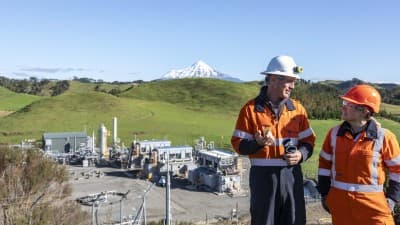
What does this mean for our local gas supply and the price of gas? Ben Gerritsen, General Manager of Customer and Regulation at Clarus, was recently interviewed on RNZ about this subject, and he explained the likely impact of the Methanex exit.
“It’s a big deal in terms of the local economy in Taranaki,” Gerritsen told Kathryn Ryan on Nine to Noon, “and it’s a big deal for the energy system as a whole.”
While Methanex’s closure could make more gas available to other users in the short term, it doesn't change the underlying decline in New Zealand's domestic gas production. The loss of a major industrial business is also not a win for New Zealand, particularly for Taranaki's jobs and economy.

Ben Gerritsen, GM Customer & Regulatory at Clarus
Will there be more gas to go around?
Methanex previously consumed around 40% of New Zealand's gas supply, so its closure could mean more gas is available to other users in the short term. It's difficult to predict what impact this will have on gas prices, as Gerritsen explains.
“Over the next two to three years, I think we can expect, with Methanex closing, there will be more gas available in the market. Those tighter gas market conditions we’ve seen in recent years, we might expect those to relax a little bit, which I think will be good for near-term pricing. You’ve always got to be careful in terms of predicting future prices.”
Methanex's closure doesn't significantly change the costs of operating the Firstgas pipeline network, which delivers gas to homes and businesses throughout the North Island. Methanex’s facilities are located near existing gas fields, which means there is very little pipeline infrastructure dedicated to supplying them. As a result, the closure of Methanex will not substantially affect the prices other gas users pay for using gas pipeline infrastructure.
For households and smaller businesses, there is no need to stop using gas. These customers use relatively small amounts compared with major industrial users like Methanex, and gas continues to be delivered safely and reliably.
Almost 300,000 New Zealand homes and businesses use piped gas, making a reliable gas supply important for many New Zealanders.
Supporting New Zealand’s electricity system
Methanex has played an important role in providing flexibility to New Zealand's electricity system by reducing production and making gas available to electricity generators when needed.
Genesis Energy is working with Methanex to start receiving some of the gas, which Genesis will use partly to support the electricity grid at peak times. At other times it might sell the unneeded gas to industrial users, and this could vary from year to year.
Gas-fired generation plays an important role in supporting New Zealand's electricity system, particularly when the wind isn't blowing, hydro lake levels are low or electricity demand is high.
While New Zealand needs more renewable electricity generation, we also need flexible generation that can respond when renewable generation isn't enough.
Looking ahead for long-term solutions
Methanex's closure gives the gas market some breathing room in the short term, but it doesn't create new gas supply or change the longer-term decline in New Zealand's gas production.
Gas continues to play an important role in electricity generation and supplying industry and homes and businesses, so maintaining reliable gas supply is important.
This includes exploring new sources of supply and developing renewable gases such as biomethane, which is already being injected into the Firstgas network at Reporoa.
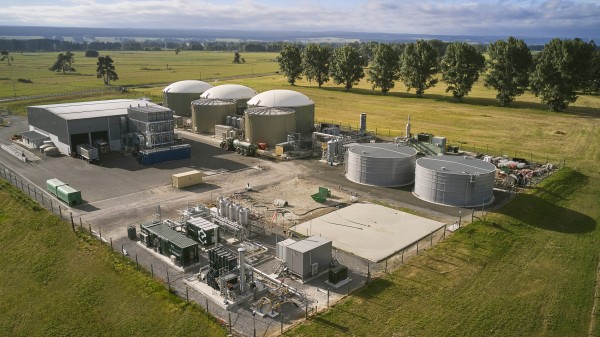
Firstgas’ biomethane upgrade facility at Ecogas’ Organics Processing Facility in Reporoa
As our natural gas supply declines, Gerritsen said, “this increases the imperative to think creatively about other sources of supply. We know that there are long-term needs for gas in New Zealand, whether that’s for peaking electricity generation, high-temperature process heat, or consumers who love gas at home. It’s imperative that we look to those longer-term solutions to meet that demand.”
Clarus is exploring alternative gas sources, including biomethane. While renewable gases are currently produced on a much smaller scale, they have the potential to complement domestic natural gas supplies.
You can learn more about the future of gas here, and find out more about how Clarus is working to develop biomethane generation in New Zealand.