With global geopolitics causing high fuel prices, how can we can grow our local renewable energy sector?
Renewable gas can provide low-emissions, locally-produced energy – all from organic waste that would otherwise go to waste. New Zealand already has one major renewable gas project at Reporoa, but the latest GasNew Zealandreport shows the full potential of this technology. We talk to Peter Sandston, Acting GM Future Fuels, about how Aotearoa could accelerate our production of renewable gas.
Let’s start by recycling more household food
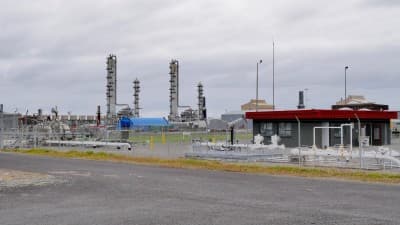
At Reporoa, household food scraps are upcycled into biogas, upgraded to biomethane, biofertiliser and biogenic CO₂. Sandston explains that there is capacity at the Reporoa plant to handle more food waste and to deliver even greater benefits for New Zealand.
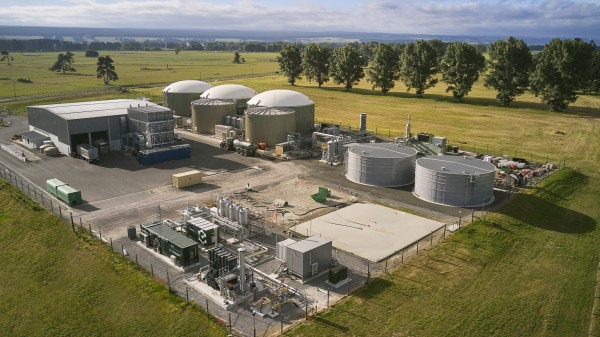
First Renewables Biogas to pipeline facility at Ecogas’ Organic waste Processing Facility in Reporoa
“Increasing uptake of food scraps bins is the best opportunity we have to produce more renewable gas today,” says Sandston. “I think we could do more to explain to people what a huge opportunity this is. Ecogas and First Renewables can deliver more organic fertiliser and renewable gas to customers using the infrastructure already in place, while minimising waste to landfill.”
There is a new Ecogas processing facility currently under construction in Hornby, Christchurch, which will be receiving organic kerbside waste from Canterbury households from early 2027.
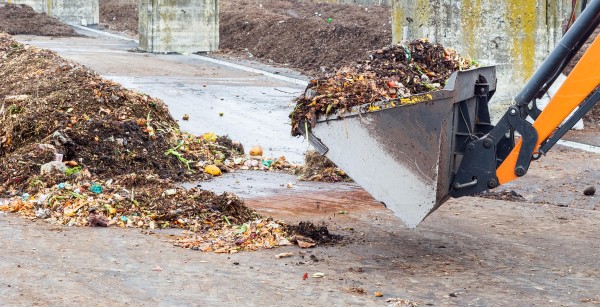
iStock image of earth mover working with pile of compost
The next step - agricultural waste
Biomethane is especially valuable for businesses which depend on the very high, fast heat of natural gas, and can’t easily move to a different energy supply, GasNZ says. Biomethane could meet half of New Zealand’s natural gas demand by 2050, according to the Biomethane Strategy and Action plan recently delivered to Government by GasNZ.
Maximising our use of food scraps is the ideal place to start scaling up our renewable gas, but there are many more opportunities to really grow the sector.
“Industrial and agricultural waste from meat and dairy factories is a big opportunity, but it is a challenging jump from post-consumer waste,” Sandston says. “Many industrial wastes are spread directly to land or sent to compost, which might sound good but these can lead to very poor outcomes for nutrient management, odour and methane emissions. Anaerobic digestion offers the ideal solution to these problems, via safe high quality fertiliser and fully contained processes capturing the value that would otherwise be thrown away?
We need to make it cost-effective for the dairy sector to supply its waste to be turned into gas. Investment is required, and the private sector can’t do it alone, notes Sandston. He says we need to see government commitment to renewable gas, helping provide certainty to the emerging biogas sector, which can deliver a secure, domestic renewable energy future, but it needs help.
“Overseas we see that jurisdictions put a high value on carbon abatement, with a financial recognition of that abatement – that can help overcome some of the barriers.”
“Prosperity and a cleaner future”
Trying to move the energy needle at a national scale is something Sandston is passionate about. He graduated with a degree in mechanical engineering and a master’s in renewable energy, then spent several years working to bring power to off-grid communities in developing countries. Across countries including Afghanistan and the Pacific Islands, he designed and implemented small-scale wind, solar and hydro generation projects.
When Sandston shifted into the commercial sector, he worked for engineering start-ups, including an IoT energy connectivity business, before moving to Clarus. In his current roles, he’s been instrumental in New Zealand’s first biomethane project with Ecogas and helped drive investment in a joint venture with Harmony Energy, soon to commission Tauhei, New Zealand’s largest solar farm.
“When we deliver on renewable energy infrastructure, we can drive prosperity and a better environment for all New Zealanders”.
You can read more about Clarus’ role in New Zealand’s energy transition at Future of Energy.