Recent debate in New Zealand about LNG has focused heavily on cost, global markets and uncertainty. These are valid considerations. But the more fundamental question is what our energy system will require over the next decade, and how we manage those requirements in a practical way.
Gas remains an essential fuel for supporting a highly renewable and resilient electricity grid, to power New Zealand’s economy and keep our households warm and comfortable.
In the winter of 2024 we saw New Zealand’s energy system pushed right to the limit. Too little rain, not much wind and constrained gas supplies drove wholesale electricity prices up to more than $800 per megawatt hour.
How do we avoid it happening again? PwC’s 2026 Gas Supply & Demand Study sets out the challenges, and how we can work to create a more resilient electricity sector supported by gas.
Energy reliability will depend on a range of solutions
Gas production in New Zealand has fallen faster than expected in recent years, which is a problem because gas has been our country’s backup energy source in dry years.
PwC projects that New Zealand’s gas supply will fall by a further 50% by 2035. With OMV indicating that the Maui gas field will cease production by the end of 2026, we may also see significant changes to industrial gas demand. This includes users such as Methanex, which has historically reduced its gas consumption during periods of tight supply, freeing up gas for electricity generation when it is needed most. Without this supply buffer our energy system would likely become less flexible and more exposed to electricity price volatility, particularly during winter peaks or when renewable generation is low. Beyond system flexibility, high energy prices are already affecting economic activity, with major industrial closures in recent years citing energy costs as a contributing factor. For example, after the winter of 2024, two paper mills in Ruapehu closed permanently, citing ‘high energy prices’.
While we need to continue to grow our use of renewable energy, we don’t yet have a renewable dry-year solution. So, in the near term, shortages of domestic gas could disrupt businesses and households. Over the next decade, a range of energy options can help keep energy reliable and affordable in New Zealand.
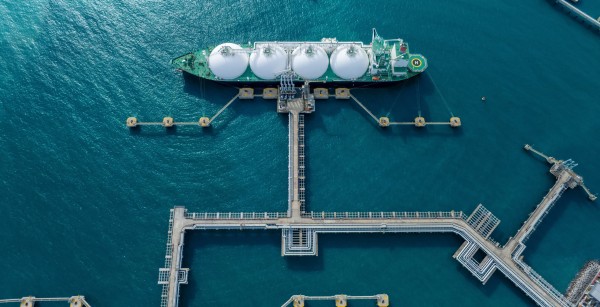
iStock image of LNG tanker anchored in Gas terminal gas tanks for storage
LNG is an insurance policy
Importing Liquefied Natural Gas (LNG) should be viewed as insurance. Just like insuring your home, it can feel costly when nothing goes wrong, but it looks like great value if an unexpected or rare event occurs.
The PwC report refers to findings by Sense Partners, which found that an LNG terminal could add over $1 billion to New Zealand's GDP, around $700 million to government tax revenue, and around 5,000 more jobs to national employment.
On the flip side, without LNG, New Zealand will need to rely more heavily on coal and diesel for electricity backup. That translates into higher greenhouse gas emissions and potentially more volatile energy prices for our homes and businesses.
Imported LNG gives us an additional energy option that we can fire up when domestic production or hydro conditions can’t meet demand. On-demand gas reduces the likelihood of energy price spikes and lowers the risk of brownouts. Just as importantly, it gives businesses confidence to invest and operate in New Zealand, knowing that we have a range of fuel options available.
The EU already uses imported LNG to combat power shortages. In Europe, LNG is enabling a pivot away from Russian gas, insulating the region from certain geopolitical risks. Like New Zealand, both Brazil and Colombia generate more than 60% of their electricity from hydropower. These countries both use LNG imports to help manage dry periods. Australia has an LNG terminal under construction in Port Kembla, NSW to help it bridge the gap between renewables and demand while it develops more renewable generation.
Energy resilience is a foundation for economic stability
LNG does not alter New Zealand’s gas transition endpoint or net zero ambitions, the PwC report notes. Having LNG as an option supports an orderly energy transition, giving New Zealand time for its renewable build-out, network upgrades, and consumer investments. It can be scaled to firm new renewables or support new industrial demand and can also respond to changes in New Zealand’s domestic gas production.
Energy resilience is not a luxury. It is a foundation for economic stability. That is why adding new fuel options like LNG will help to ensure future prosperity. More options mean less volatility, fewer forced shutdowns, and avoiding long-term erosion of industrial capability and economic stress.